

Export Insights

The PRODG Global
Trade Intelligence Blog

Practical, data-driven guides for B2B importers, distributors, and procurement teams sourcing premium Indian FMCG and agro products globally.

Latest Articles

Spice Export
📅 March 2026 ⏱ 9 min read ✍️ PRODG Global Export Team

Why India Is the World's Most Reliable Spice Export Partner

India supplies over 75% of the world's traded spice volume. For B2B importers evaluating sourcing alternatives, the question isn't whether to source from India — it's how to do it right. This guide gives you the frameworks, quality specifications, and supplier evaluation criteria you need.

India's Dominance in the Global Spice Trade

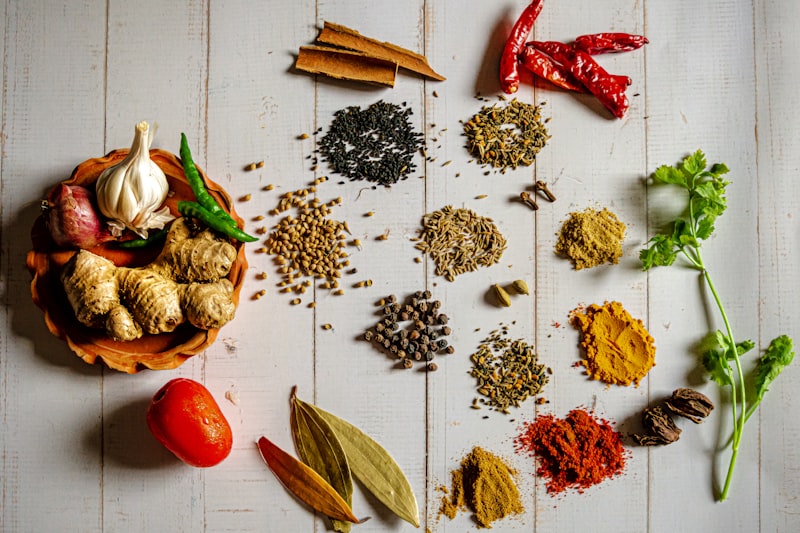
India is not merely a spice exporter — it is the origin, standard-setter, and primary price-anchor for the global spice market. According to the Spices Board of India, the country exports over 14 lakh metric tonnes of spices annually, valued at approximately USD 4 billion. No other origin comes close in terms of diversity, volume, and institutional infrastructure.

The country grows over 50 different spice varieties across its diverse agro-climatic zones — from Himalayan saffron in Kashmir to Malabar black pepper in Kerala, Rajasthan cumin to Guntur chilli in Andhra Pradesh. This geographic diversity is a structural competitive advantage that no single competing nation can replicate.

"When a buyer in Hamburg or Houston prices out chilli powder, they are benchmarking against Guntur. When they price coriander, they benchmark against Rajasthan. India doesn't just set the price — India is the market."

Understanding ASTA Grades — What Every Importer Must Know

The American Spice Trade Association (ASTA) colour value system is the international benchmark for chilli product quality. For importers, understanding ASTA grades is non-negotiable. Here's what the numbers mean:

ASTA Grade Colour Intensity Typical Application Price Premium
Below 80Low (pale red)Industrial processed foodBase pricing
80–100MediumFoodservice, blends+5–10%
100–130High (deep red)Retail, premium foodservice+15–25%
130–160Very highPremium retail, branded products+30–45%
160+ExceptionalExport-grade, clean-label products+50–80%

PRODG Global sources ASTA 120–160+ chilli powder primarily from Guntur, Andhra Pradesh — home of the legendary Teja S17 and Byadgi varieties, the twin pillars of India's premium chilli export trade.

The Teja S17 Variety — Why It Matters for Your Supply Chain

If you import Indian chilli products, you have almost certainly used Teja S17 without knowing it. This is the variety that underpins the majority of India's chilli powder exports — and for good reason.

  • Pungency: 50,000–85,000 Scoville Heat Units (SHU) — consistently hot but within processable ranges
  • Colour value: ASTA 100–130, with premium lots reaching 150+
  • Availability: Harvested October–January in Guntur district; available year-round in dried form
  • Global usage: Dominant in Middle East, UK Asian food sector, and US ethnic food markets
  • HS Code: 0904.21 (whole, dried); 0904.22 (ground)

The Byadgi variety from Karnataka complements Teja S17: lower pungency (8,000–15,000 SHU) but exceptional deep red colour (ASTA 180–220). It is indispensable for colour-dominant applications — paprika substitution, curry powders, and restaurant-grade sauces.

Buyer Tip: For maximum value, many importers blend Teja S17 (for heat) with Byadgi (for colour). Specify your target Scoville range and ASTA value in your RFQ — PRODG Global can formulate custom blends with consistent COA documentation.

India's Full Spice Portfolio — Key Export Varieties

Beyond chilli, India's export-grade spice portfolio is extensive. The table below summarises the key commercial varieties PRODG Global exports:

Spice Key Region Top Export Grade Primary Markets
Chilli (Whole/Powder)Guntur, KarnatakaTeja S17, ByadgiUAE, UK, USA, Europe
TurmericErode (Tamil Nadu)Lakadong (7%+ curcumin)USA, EU, Australia
Black PepperKerala (Malabar)Malabar Garbled MG1USA, Germany, Vietnam
Cumin (Jeera)Gujarat, RajasthanETO-free, machine-cleanedUAE, UK, Europe
Ginger (Dried)Kerala, Himachal PradeshBleached & unbleachedMiddle East, UK
FennelGujarat (Unjha)Unjha Grade premiumUAE, USA, EU
CardamomKerala (Idukki)8mm+ bold greenSaudi Arabia, UAE

Quality Certifications That Protect Your Import

Importing spices from India without demanding the right certifications is the most common — and most costly — mistake first-time buyers make. Here's what to require from any Indian spice exporter:

  1. Certificate of Analysis (COA) — Lab-tested results for moisture, ash content, volatile oils, purity, and microbial counts. Minimum: one COA per batch.
  2. Phytosanitary Certificate — Mandatory for import into EU, USA, Australia, and most regulated markets. Issued by Government of India.
  3. FSSAI Certification — India's Food Safety and Standards Authority. Required for any food product exported from India.
  4. APEDA Registration — Agricultural & Processed Food Products Export Development Authority. Ensures the exporter is a registered, accountable entity.
  5. ETO (Ethylene Oxide) Residue Test — Critical for EU market. EU banned ETO-treated spices in 2021; buyers must demand ETO-free certification.
  6. Pesticide Residue Analysis (PRA) — Required for UK, EU, USA, and Australia. Tested against MRL (Maximum Residue Limits) standards of the destination country.

EU Buyers Note: Since 2021, the EU has enforced strict ETO-free requirements on spice imports. Non-compliant shipments have been recalled at significant cost to buyers. Always request an ETO residue test report dated within 3 months of shipment.

The PRODG Global Spice Sourcing Checklist

Use this checklist when evaluating any Indian spice exporter — including us:

  • Can they provide APEDA and FSSAI registration numbers for verification?
  • Do they offer pre-shipment lab testing at an accredited NABL laboratory?
  • Can they supply ETO-free certification for EU-bound orders?
  • Do they have cold-room or controlled warehouse storage for spices awaiting export?
  • Can they demonstrate supply chain traceability to the farm/district level?
  • Will they provide a reference from an existing EU, UK, or USA buyer?
  • Do they accept international payment terms (LC, T/T) with standard commercial documentation?

Why Source Spices Through PRODG Global?

PRODG Global is a Andhra Pradesh-based APEDA-registered, FSSAI-certified export company with deep sourcing relationships across Guntur (chilli), Erode (turmeric), Unjha (fennel and cumin), and Malabar (pepper and ginger). We handle pre-shipment quality checks, full documentation packages, and multi-origin blending where required.

Our typical chilli powder export spec: ASTA 100–160, moisture below 10%, 0% artificial colour, ETO-free, pesticide residue within EU MRL. Available in 1kg retail packs, 5kg foodservice packs, and 25kg commercial bags.

Frozen Produce
📅 February 2026 ⏱ 11 min read ✍️ PRODG Global Export Team

Sourcing IQF Frozen Vegetables from India: A Complete Buyer's Guide

India's frozen food export industry has grown by over 18% annually since 2020. With world-class IQF technology, cold-chain infrastructure investments, and one of the largest agricultural output bases on earth, India is now the sourcing destination of choice for supermarket chains, foodservice distributors, and food manufacturers worldwide. Here's everything you need to know before placing your first order.

What Is IQF Technology and Why Does It Matter?

IQF stands for Individually Quick Frozen — a cryogenic freezing technology that processes food items at temperatures between -30°C and -40°C within minutes of harvest. Unlike traditional blast freezing (which freezes in bulk blocks), IQF ensures each piece of vegetable or fruit is frozen individually, preserving:

  • Cell structure integrity — no ice crystal damage, no mushiness on thawing
  • Nutritional content — frozen within hours of harvest, often more nutritious than "fresh" produce shipped over days
  • Natural colour and flavour — blanching and rapid freezing locks in pigments and volatile flavour compounds
  • Portion control — individual pieces allow precise portion dispensing for foodservice operations
  • Shelf life — typically 18–24 months at -18°C, enabling long-distance supply chains

For importers, IQF translates to consistently higher product quality compared to ambient or chilled alternatives, with drastically reduced waste and predictable specification adherence.

India's IQF Export Advantage

India's competitive advantage in IQF frozen produce is multi-layered and structural — not cyclical:

FactorIndia's PositionImplication for Buyers
Agricultural volume2nd largest vegetable producer globallyYear-round supply security across multiple varieties
Labour cost60–70% lower than EU/USProcessing costs remain globally competitive
Climate diversityMultiple harvest seasons across statesReduced weather-event risk; multi-region sourcing
IQF plant investment400+ APEDA-registered cold chain facilitiesCapacity to handle large commercial orders with QC systems
Export infrastructureMajor ports: JNPT, Chennai, Mundra, VizagMultiple reefer container routes to key markets
CertificationsAPEDA, FSSAI, GlobalGAP, HACCP, BRC availableCompliance with EU, UK, USA, and GCC import requirements

Key IQF Products India Exports — Specifications & Varieties

IQF Vegetables

  • Green Peas (Pisum sativum) — Variety: Arkel, Bonneville. Grade: 6–9mm, 9–11mm. HS: 0710.10. Season: Oct–Mar (North India). MOQ: 5 MT.
  • Sweet Corn (Zea mays var. rugosa) — Cut-off-cob and whole kernel. Grade: Tender, Supersweet. HS: 0710.40. Season: year-round. MOQ: 5 MT.
  • Potato Cuts (Solanum tuberosum) — Dices (10mm, 20mm), strips, slices, whole baby. HS: 0710.10. Season: year-round. MOQ: 5 MT.
  • Broccoli Florets — Grade A: 3–5cm florets, deep green, blanched. HS: 0710.80. MOQ: 2 MT.
  • Mixed Vegetables — Custom blends (carrot, pea, corn, bean, broccoli). Retail pouch or foodservice catering format. MOQ: 5 MT.

IQF Fruits

  • Alphonso Mango Slices/Dice — Variety: Alphonso, Kesar, Totapuri. Grade: 20mm dice, 30mm slice. HS: 0811.90. Season: Apr–Jun (main), Nov–Feb (South).
  • Mango Pulp (aseptic) — Brix 14–17°, pH 3.5–4.0, 100% natural, no preservative. Available in 210kg aseptic bags or 1kg retail packs.
  • Pomegranate Arils — Variety: Bhagwa. Grade A: deep red, uniform size, no seeds. HS: 0811.90. Season: Oct–Jan.

Quality Parameters — What to Specify in Your RFQ

Vague specifications are the root cause of most frozen produce disputes. When submitting a request for quotation, always specify:

  1. Variety and grade — e.g., "Green Peas, Arkel variety, 6–8mm calibrated, Grade A"
  2. Blanching specification — "water-blanched, no steam" or "IQF directly post-peel"
  3. Defect tolerance — e.g., "maximum 2% broken, 1% foreign matter by weight"
  4. Microbiological limits — Total Plate Count, Coliforms, Salmonella, Listeria as per destination country regulations
  5. Packaging format — 10kg master carton with 1kg retail inserts, or 20kg bulk LDPE bags in master carton
  6. Shelf life remaining on delivery — typically "minimum 18 months remaining at time of shipment"
  7. Cold chain temperature — "maintained at -18°C from plant to port; reefer containers at -18°C"

Pro Tip: Request a pre-shipment inspection report from a third-party inspector (SGS, Bureau Veritas, or Intertek) — particularly for first orders. This costs USD 300–600 but eliminates quality disputes and protects your customs clearance.

Cold Chain Logistics from India — How It Works

Understanding India's cold-chain export pathway helps you plan lead times and negotiate freight terms confidently:

  • Processing plant to cold store: Reefer truck transport (-18°C maintained). Typically 1–3 days from Tier-2 production hubs (Agra, Nasik, Muzaffarpur) to port cold stores.
  • Port cold storage: Major ports (JNPT/Mumbai, Mundra, Vizag, Chennai) have approved cold stores. Cargo awaits reefer container stuffing under -18°C.
  • Container stuffing: Conducted in temperature-controlled docks. Container pre-cooled to -18°C before stuffing. Seal applied and pre-cooling certificate issued.
  • Ocean transit: India to UAE: 6–9 days. India to UK/Europe: 18–25 days. India to Australia: 14–20 days. India to USA (East Coast): 21–28 days.
  • Port of destination: Customs clearance, cold-store offload. Buyer arranges onward distribution under cold chain.

Essential Certifications for IQF Imports from India

Different destination markets have different regulatory requirements. This matrix summarises what you'll need:

CertificateRequired ForIssued By
Phytosanitary CertificateAll markets (mandatory)NPPO / Govt. of India
Certificate of OriginEU, UK, Gulf, AustraliaExport Inspection Council / Chamber of Commerce
APEDA CertificateAll agri-export buyersAPEDA (Govt. of India)
GlobalGAPEU supermarkets, UK retail chainsBureau Veritas / SGS
BRC / IFSUK, Germany, France retailBritish Retail Consortium
HACCPUSA, EU foodserviceAccredited body
Halal CertificateGCC, Malaysia, IndonesiaHFSAA / Islamic body
Organic (NPOP/NOP)Premium EU/USA organic channelsControl Union, IMO

5 Common Sourcing Mistakes — And How to Avoid Them

  1. Not specifying microbiological limits upfront. Many importers only discover their destination country's regulatory limits after the shipment arrives. Always specify Salmonella (negative/25g), Total Plate Count (max 1,000,000 CFU/g), and E. coli (negative/g) in your PO.
  2. Ignoring shelf life at time of shipment. Receiving a product with only 8 months shelf life when your distributor needs 18 is a costly mistake. Always specify "minimum X months shelf life remaining upon arrival at destination port."
  3. Not verifying cold-chain break points. Some exporters do not maintain -18°C during road transit to port. Request a temperature logger report from plant to container stuffing.
  4. Accepting verbal quality claims without COA. A Certificate of Analysis from an NABL-accredited Indian laboratory is your legal and commercial protection. Never release payment without it.
  5. Underestimating lead times for first orders. First-time orders require farm sourcing, processing scheduling, cold store booking, and documentation preparation. Allow 21–28 days from PO to shipment for a first order. Repeat orders can be expedited to 14–18 days.

Sourcing IQF Frozen Produce with PRODG Global

PRODG Global exports IQF frozen vegetables and fruits from APEDA-registered processing facilities in Maharashtra (mangoes, pomegranate), Uttar Pradesh (green peas, mixed vegetables), and Karnataka (sweet corn, broccoli). All produce is processed in HACCP-certified plants with integrated cold chain to port.

Our standard export pack: 10kg master carton (2 × 5kg LDPE inner bags), -18°C, 18-month shelf life, full microbiological COA from NABL lab, Phytosanitary Certificate, APEDA registration.

We handle EXW, FOB Mundra/JNPT, and CIF pricing across all major markets. Sample orders (50–100kg) available for qualified buyers.

Ready to Source from India?

Our export specialists are available to answer sourcing questions, provide market intelligence, and build a custom quote for your requirements.